B3108 Speed Limit Analysis
Additional reductions
Cycle infrastructure benefits
Narrowing the road encourages people to drive more slowly. One way to achieve this is by adding high quality cycle and walking infrastructure to the road, such as the AI generated image below. 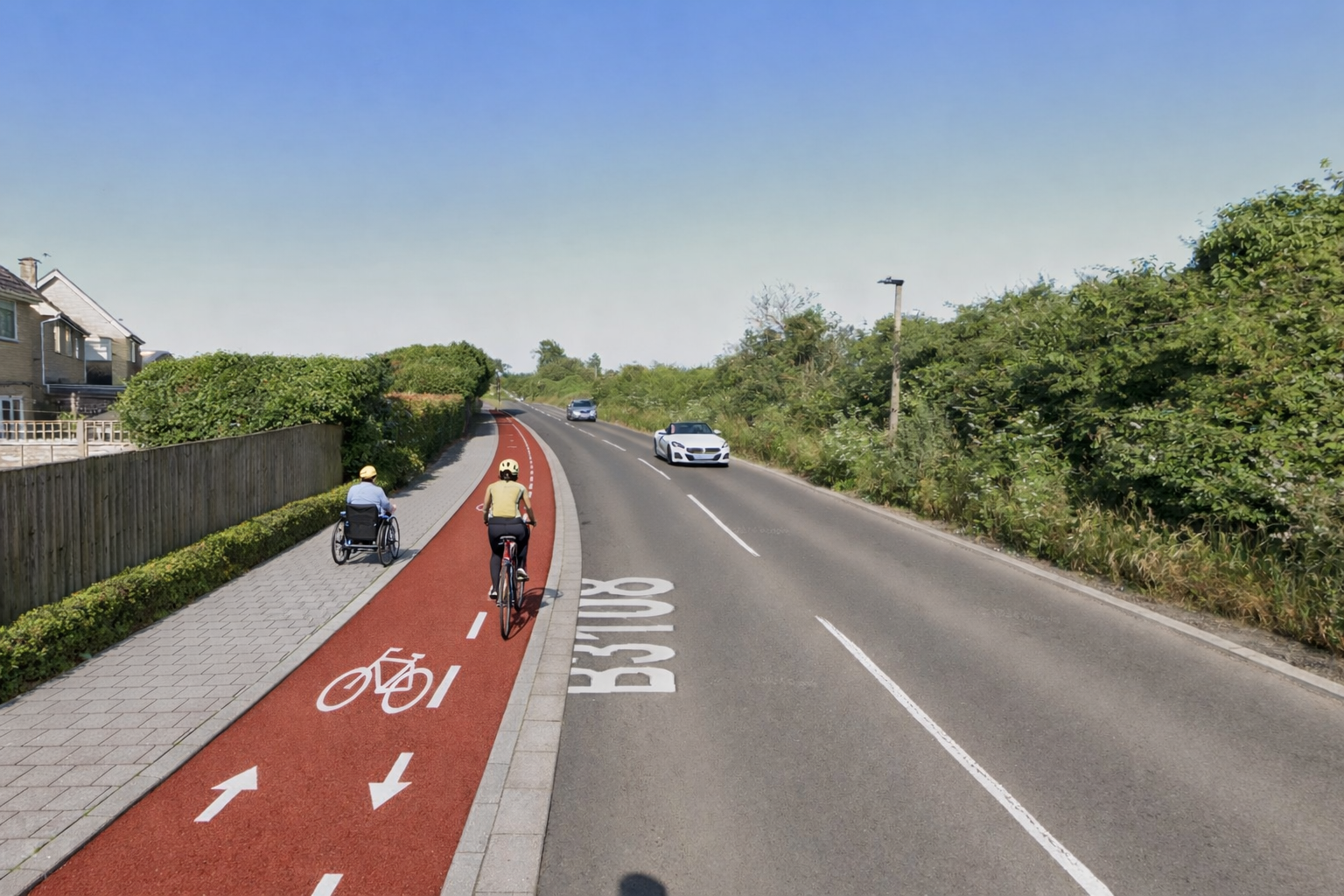 TAG table 4.1.6 provides a cost benefit for cycle infrastructure to the cyclist based on the time spent cycling the infrastructure.
Using the DfT estimate for cyclists using the road each day, it is estimated that the benefit for adding a segregated cycle path along the full length of the B3108, assuming a cyclist travels at 5 metres per second, could be quantified at over £30,000 per year to the 500+ cyclists who currently use the road every week. Adding this, along with a high quality footpath, could reduce the road width, also reduce the speed of vehicles down the road. It would also become an artery for active travel through the area.
One of the takeaways from the analysis of STATS19 data on drivers involved in collisions on the road is that they generally live locally. Enabling people to undertake local journeys on foot or by bicycle will reduce the number of motor vehicles on the road.
(map of LSOA of drivers)
Air pollution
The image below shows an example of NO2 drop off calculated with the Defra NO2 drop off tool. NO2 reacts with the atmosphere and decreases (‘drops off’) relatively quickly from the roadside. Even without any changes to the vehicle fleet or number of vehicles using the road, it is estimated that increasing the source (vehicles) and receptor (buildings) distance by 2m NO2 would be 14% lower at the receptors 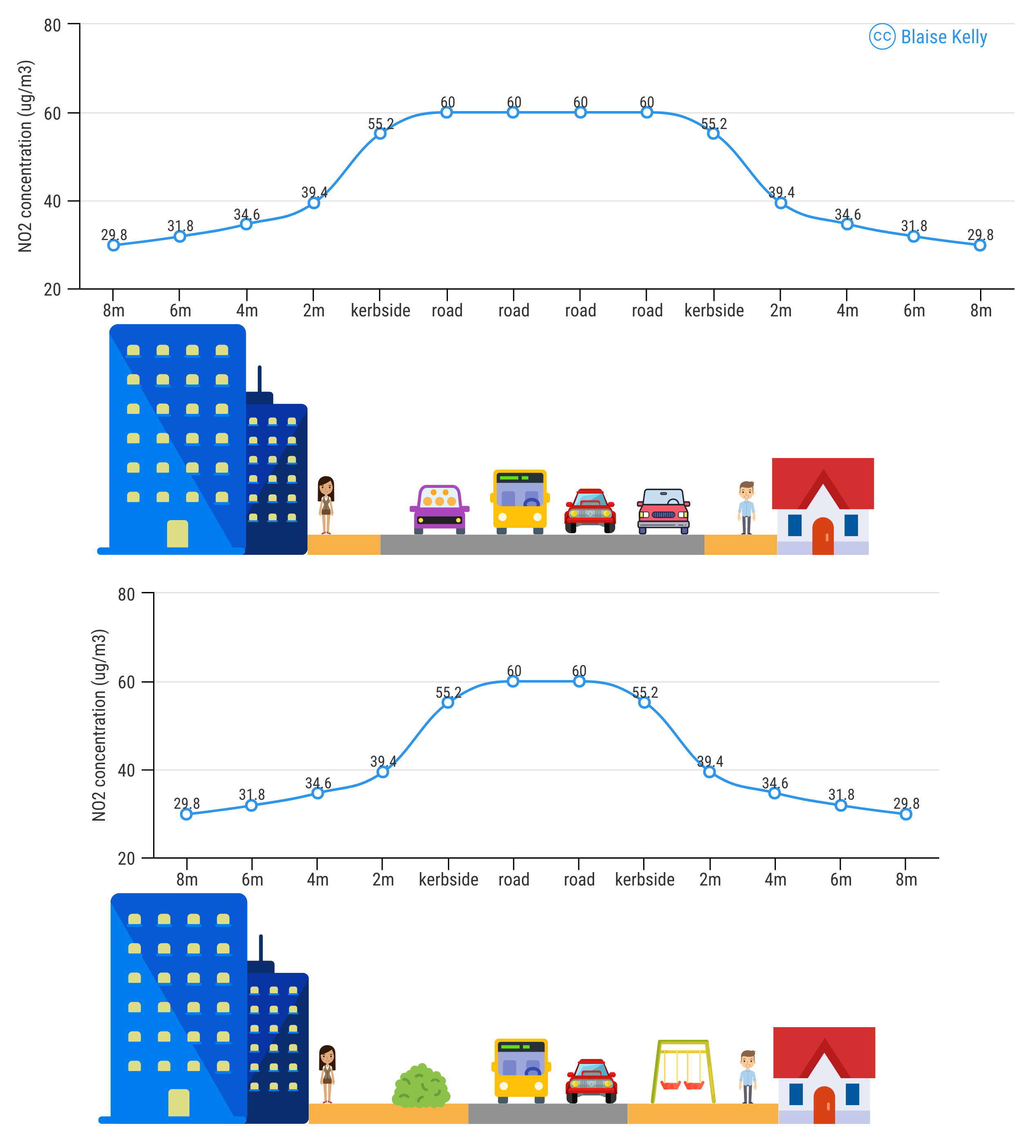
TAG sheet A3.3 Table A 3.2.2 Gives a damage cost value range based on incremental concentrations. Assuming a roadside NO2 concentration between 10ug/m3 and 40ug/m3 and taking the lower and upper monetary estimates the benefit of reducing roadside concentrations by 14% for the population living next to the road would be between £1,546 and £239,733 just for NO2.
Summary
- Adding cycle path: £30,000
- Air Pollution: £1,546 - £239,733
Adding a cycle path could give cyclists a £30,000 benefit and increasing the source receptor distance with a fully segregated two way cycle path could save £239,733 in air pollution exposure costs, adding nearly £300,000 to the £3,104,886 net benefit to the area.